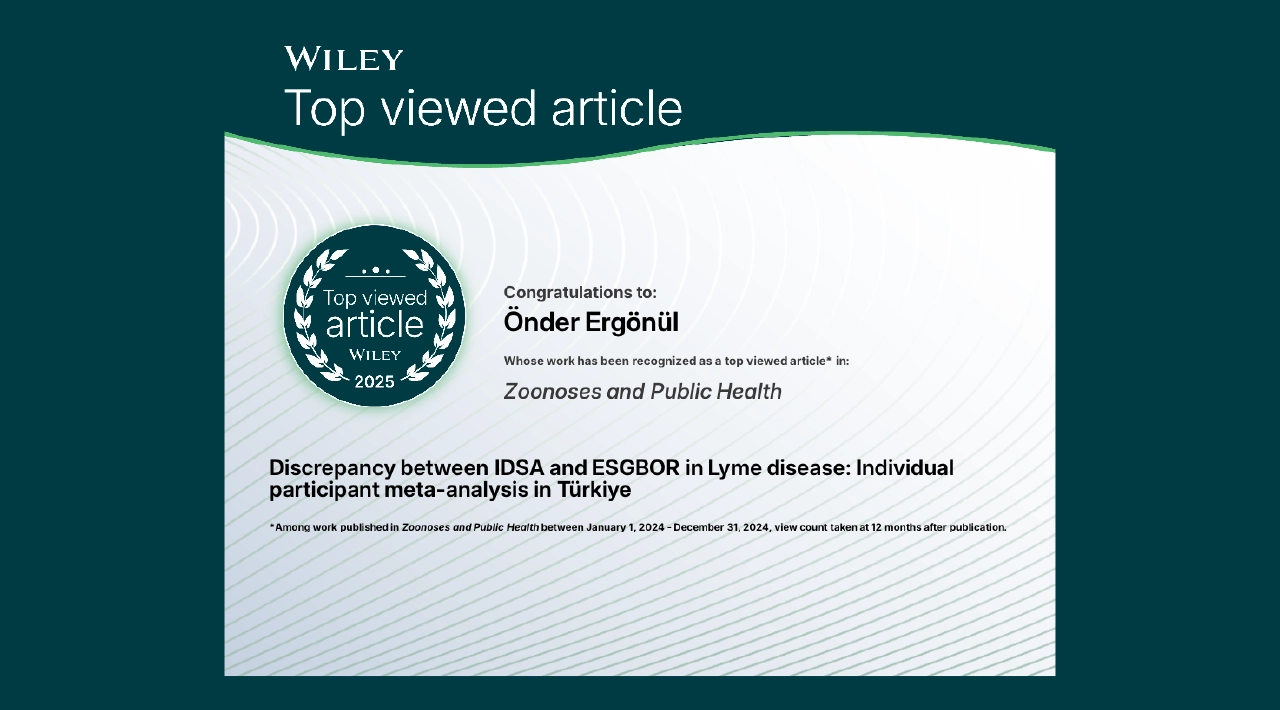


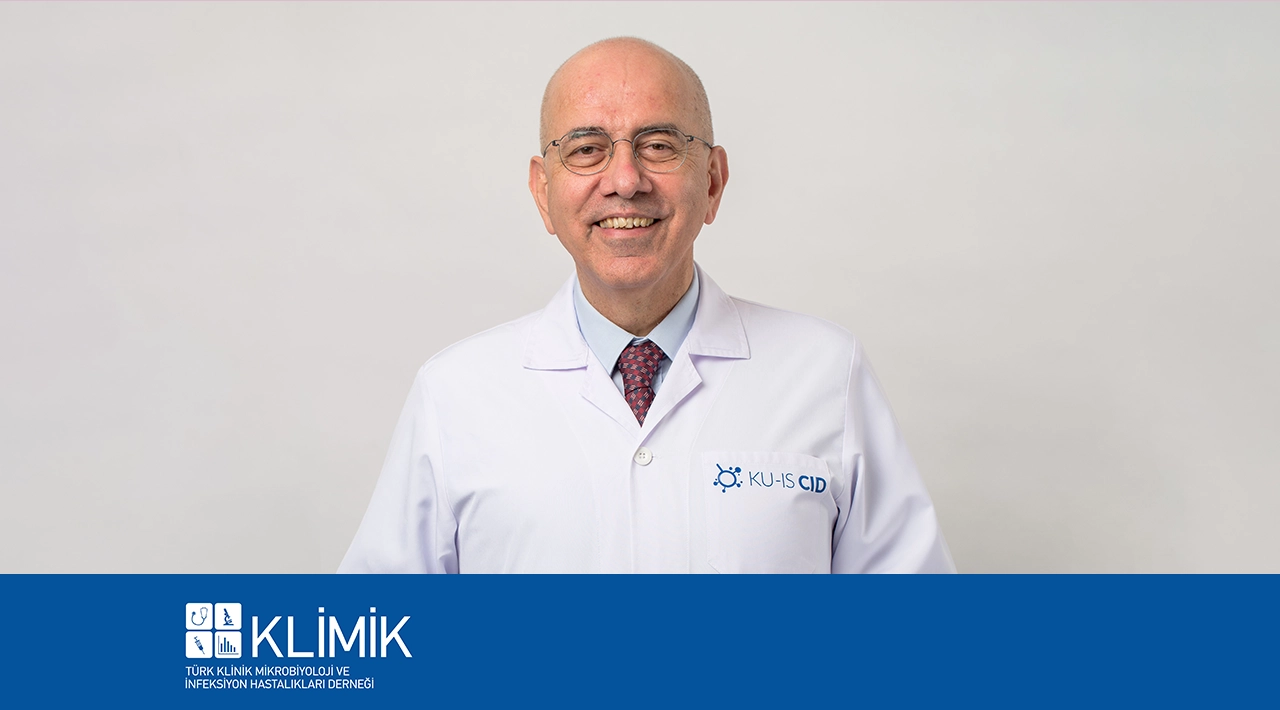
KUISCID Director Prof. Önder Ergönül, was a guest on the live broadcast titled “Crimean–Congo Hemorrhagic Fever and Emerging Infections: What Is the Current Situation and What Are the Future Risks?”, held in collaboration with the Klimik Society and moderated by Specialist Dr. Merve Büyükkörük.
Prof. Ergönül noted that climate change is reshaping the geographic distribution of infectious diseases, emphasizing that cases of Crimean–Congo Hemorrhagic Fever (CCHF) are no longer confined to Türkiye but have also been reported in Spain and Portugal, posing an emerging risk for Southern and Southwestern Europe. He stressed that CCHF is a disease requiring close monitoring due to its high mortality rate, and highlighted Türkiye’s strong clinical and scientific expertise in this field.
Emphasizing the critical importance of PCR testing for early diagnosis and the early use of ribavirin, Prof. Ergönül pointed out to the mortality rates in centers using ribavirin being around 5%, among the lowest reported worldwide. He also drew attention to the role of climate change in accelerating the spread of other vector-borne zoonotic infections.
Highlighting the need for preparedness against emerging infections, Prof. Ergönül stated that health systems must be equipped with strong laboratory infrastructures and built on scientific, flexible frameworks, in the name of transparent and realistic risk assessment rather than panic.